
A Defining Moment for Kenya’s Real Estate Industry
Updated: Apr 21
By Antony Mutisya
Kenya’s real estate sector is entering one of its most pivotal eras in decades. While public discourse is often dominated by political noise and misinformation, the country is quietly undergoing a structural transformation driven by large‑scale infrastructure projects, public‑private investments, and the maturation of the property market. Beneath the surface, a new economic geography is taking shape—one that will redefine where Kenyans live, work, trade, and invest.
As Thomas Edison famously observed, “Opportunity is missed by most people because it is dressed in overalls and looks like work.” This sentiment is especially true for Kenya today. The opportunities emerging across the built environment require attentiveness, strategic foresight, and industry‑wide professionalism.
Eight flagship projects stand out for their long‑term impact on the direction of real estate in the country:
1. The Affordable Housing Programme (AHP): The AHP remains the most consequential public housing initiative in Kenya’s history, targeting 200,000 units annually. By December 2025, 214,000 units were under construction across all 47 counties, supported by KSh 600 billion in signed contracts. Its scale will reshape urban density, homeownership patterns, and formalize the lower‑middle‑income housing market.
2. Rironi–Mau Summit Road Upgrade: The A8 Northern Corridor is being expanded into a modern four‑to‑six‑lane dual carriageway at a cost of KSh 200 billion, with completion expected in 2027. The project will significantly improve connectivity to Western Kenya, reduce logistics costs, and anchor new industrial and residential nodes along the corridor.
3. Standard Gauge Railway (SGR) Phase 2B: The 369 km extension from Naivasha to Kisumu and Malaba—valued at KSh 400–515 billion- is scheduled for completion by 2028. This expansion will strengthen East Africa’s trade spine and catalyze new warehouse, industrial, and port‑adjacent developments.
4. LAPSSET Corridor: With Lamu Port’s first three berths already operational, the LAPSSET project has moved from blueprint to reality. Key road segments, including the 248 km Lamu–Garissa section, are progressing, alongside efforts to finance the corridor’s rail and pipeline systems. LAPSSET will open Kenya’s most underdeveloped regions to large‑scale settlement, logistics, and agro‑industrial opportunities.
5. KenGen Green Energy Park: The 342‑hectare industrial park at Olkaria has transitioned into active development, with four anchor investors, including a steel fabrication center, a $150M EV assembly plant, a data center, and a green fertilizer facility. This is Kenya’s first geothermal‑powered industrial ecosystem—an innovation with potential to attract global clean‑energy manufacturing.
6. Konza Technopolis: Konza—“Silicon Savannah”—is now an operational smart city with over 70 investors on‑site and more than 80% of Phase 1 plots allocated. It represents a decisive shift toward knowledge‑based urban development.
7. Usahihi Nairobi–Mombasa Expressway: This proposed 440 km expressway, valued at up to KSh 468 billion, aims to reduce travel time to 4.5 hours. Construction begins in 2026. The corridor will spark new satellite towns, logistics hubs, and tourism‑linked real estate.
8. NSSF Twin Towers Project: The KSh 30 billion mixed‑use development in Nairobi’s CBD will anchor urban regeneration and support a 24‑hour economy.

Why These Transformations Matter for Real Estate Professionals
· The AHP represents over KSh 800 billion in potential unit sales, creating demand for professional agents to guide buyers through government‑backed homeownership pathways.
· Transport upgrades are decentralizing development away from Nairobi’s core. Areas such as Utawala, Ruiru, Juja, Kikuyu, Syokimau, Kitengela, Ruaka, and Ngong are now fully‑fledged residential and commercial hubs. Emerging frontiers include Limuru, Naivasha/Nakuru, Lukenya, Machakos, and the Konza belt.
· Land banking, controlled subdivision schemes, master‑planned communities, and green industrial parks are becoming mainstream investment vehicles.
· As freight volumes increase, truck stopover points offer high‑yield opportunities in fuel, convenience retail, EV charging, food services, maintenance, and wellness.
Kenya is transitioning from a speculative to an income‑generating asset culture—mirroring more mature real estate markets.
The Risks That Must Not Be Ignored
As opportunities rise, so do the risks. Real estate agents face:
High fraud exposure, including forged titles and double allocations, affects roughly 30% of transactions in Nairobi.
Money laundering risks are worsened by weak AML/CFT controls.
Regulatory burdens are increasing with the increasing compliance demands under multiple Acts.
Market volatility, especially in the office and commercial sectors.
Economic pressures, including rising construction costs and interest rates.
Cybersecurity threats targeting clients and financial data.
Physical safety risks during property viewings in remote locations.
The Path Forward: Professionalism as the New Currency
Kenya’s real estate sector is transforming at a pace and scale rarely seen before. Agents and industry players who respond with improved governance, digital readiness, client‑centric models, and ethical practice will not only survive—they will lead and thrive.
The country is not merely building infrastructure; it is constructing the foundation for a new economic future. And those who recognize the moment, embrace the work, and elevate their professional standards will define the next chapter of Kenya’s built environment.
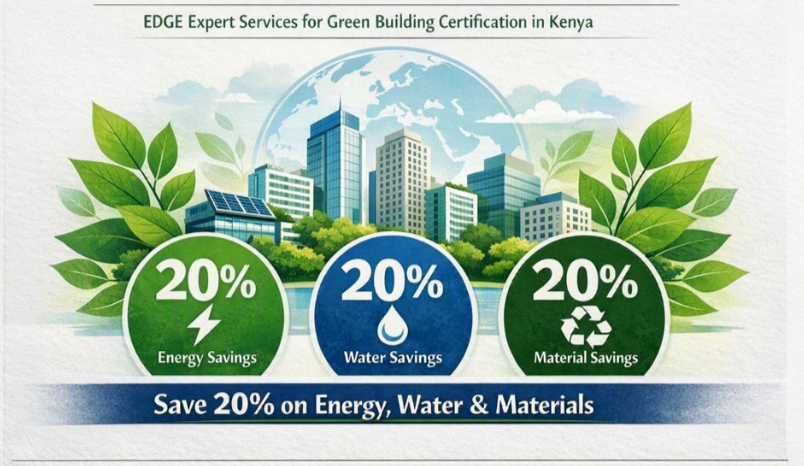
The writer is the Executive Director, Laser Property Services. He is a registered valuer (RV), a registered estate agent (REA), a full member of the Institution of Surveyors of Kenya (MISK), an RICS Chartered Senior Professional (MRICS), Certified Professional Coach (CPC), and an IFC Certified EDGE Expert.


One detail I always appreciate on a new website is being able to understand the basic structure without needing instructions. While looking through https://mel-bet.co.ke/en, I paid attention to the navigation and how the different sections were arranged. I prefer interfaces where the main options are visible and the page does not feel overloaded with unnecessary elements. This matters even more on mobile, where a crowded screen can become distracting very quickly. I also like browsing at my own pace rather than opening several sections at once. A logical menu and readable information make that much easier. For me, the best online experiences are rarely the most complicated ones; they are the ones where everything feels familiar after a few minutes…